What Bexley Council rules mean for public flower displays
Posted on 12/10/2026
If you are planning a public flower display in Bexley, the rules can feel a bit more complicated than they first look. One minute you are thinking about colours, containers, and seasonal planting; the next you are wondering whether the display can sit on a pavement edge, whether you need permission, and who is responsible if it blocks access. That is exactly where understanding What Bexley Council rules mean for public flower displays becomes useful. It helps you avoid awkward delays, keeps the display safe and tidy, and gives the flowers the best chance of actually being seen, enjoyed, and looked after.
In plain English, the council rules are about balance. They try to protect public safety, access, and local standards while still allowing attractive planting, community greening, and well-managed displays. Let's face it, a beautiful planter is lovely only if people can walk past it without squeezing into the road. This guide breaks the topic down properly: what the rules usually mean, how the process works, what to watch out for, and how to plan a display that feels lawful, practical, and worth the effort.
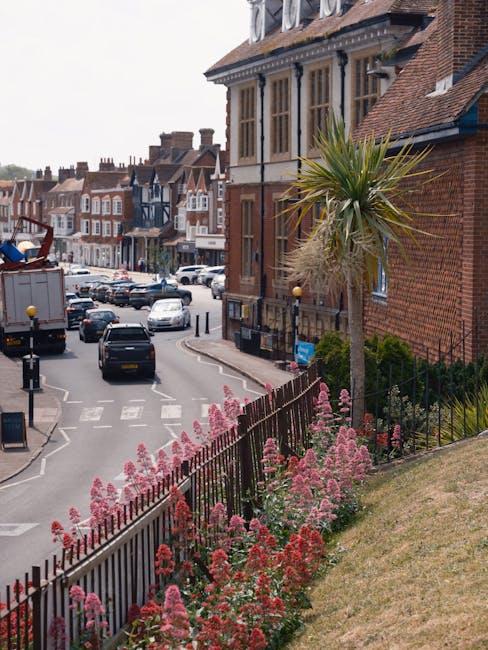
Why What Bexley Council rules mean for public flower displays Matters
Public flower displays sound simple, but they often sit at the intersection of several concerns: pedestrian access, road safety, public liability, maintenance, and local visual standards. In Bexley, as in many London boroughs, the council's approach is likely to be shaped by those practical issues first. The display may be gorgeous, but if it narrows a footway, obscures sight lines, or creates a trip hazard, the council will care about that more than the petunias. Fair enough, really.
This matters because public planting is not just decoration. It can influence how a place feels, how people move through it, and how much upkeep is needed over time. A well-placed floral display can soften a high street, mark a community space, or give a roundabout a more welcoming look. A poorly planned one can become clutter, a nuisance, or even a safety issue. That is why a clear understanding of the rules saves time and stress.
There is also a reputational side to it. If you are a business, community group, landlord, school, event organiser, or memorial organiser, a neat and compliant display reflects care. It says you thought ahead. And in a borough setting, that counts for a lot. Local authorities tend to respond better when the practicalities are already thought through.
One more thing: rules around public displays are rarely only about flowers. They often extend to the container, the base, watering arrangements, weight, anchoring, traffic visibility, and whether the display is temporary or long term. So when people ask what the rules mean, they are really asking: what is allowed, what needs permission, and what is sensible?
How What Bexley Council rules mean for public flower displays Works
The way council rules work usually depends on where the display will go and what it will affect. A planter in a private forecourt is one thing. A large arrangement on a public pavement is another. The closer the display gets to a shared public space, the more likely it is that the council will care about access, safety, and maintenance responsibility.
In practical terms, you should think in layers. First, identify the exact location. Second, ask whether the display will sit on land controlled by the council or affect public use. Third, check whether the display is temporary, seasonal, or fixed in place. Fourth, look at what it might obstruct: pedestrians, wheelchair users, prams, visibility for drivers, emergency access, or routine cleansing.
That is the basic shape of it. The fine detail varies by setup, and sometimes by street. A display near a busy junction raises different questions from one in a quiet parade of shops. Same flowers, different risk profile. A bit annoying, yes, but it is how public space works.
For anyone organising a display, the safest assumption is this: if it will sit in a public area or alter how the public uses that space, you may need to check with the council before installing it. That does not automatically mean it will be refused. It usually means someone needs to be satisfied it will not cause problems.
There is often also a maintenance expectation. Councils and landowners want to know who waters the plants, who removes damaged items, and who deals with litter, deadheading, or storm damage. An elegant display can quickly look scruffy in wet weather if nobody is on top of it. And yes, London weather has a way of testing these things.
Key Benefits and Practical Advantages
Following the rules is not only about avoiding trouble. Done properly, it can make the display better. Here are the main benefits that usually matter most.
- Safer placement: the display is less likely to become an obstacle or hazard.
- Smoother approval: when permission is needed, a well-planned proposal is easier to accept.
- Better public response: people are more likely to appreciate floral work that feels tidy and considerate.
- Lower maintenance headaches: the right container, location, and plant choice reduce hassle later on.
- Improved longevity: displays that fit the environment tend to last longer and look better for longer.
There is also a subtle benefit that experienced organisers notice. When you plan with the council framework in mind, you make decisions more cleanly. You end up asking the useful questions earlier: Is this a high footfall area? Can emergency access still pass? Is there enough room for a mobility aid? Do we have a clear contact person if something needs adjusting?
Those may not be the glamorous parts of floral display planning, but they are the bits that keep the whole thing from falling apart. To be fair, most public planting is won or lost on the unglamorous details.
Expert summary: the best public flower displays are not simply attractive; they are safe, maintainable, visible, and proportionate to the space. When those four things line up, the display usually feels like it belongs there rather than being dropped in as an afterthought.
Who This Is For and When It Makes Sense
This topic is relevant to quite a few people, not just florists. In Bexley, the kinds of people who may need to think through public flower display rules include:
- Florists creating displays for public spaces, memorials, events, or shopfront spill-out areas.
- Businesses wanting to brighten a frontage or outdoor seating edge.
- Community groups managing planting on verges, roundabouts, or shared neighbourhood spots.
- Event organisers using floral features for festivals, weddings, civic occasions, or seasonal promotion.
- Schools, faith groups, and charities arranging commemorative or welcoming displays.
- Property managers responsible for outdoor presentation near public access routes.
It makes sense to think about the rules whenever the display crosses from private taste into public impact. If people walk past it, wheel past it, clean around it, or need to manoeuvre around it, the council lens becomes relevant. The same is true if the display is likely to stay in place for more than a day or two, or if it includes heavy containers, signage, ribbons, or tribute elements.
For example, a florist preparing a roadside memorial arrangement may need to think differently from someone decorating a wedding entrance. One might be highly time-sensitive and tied to a public verge; the other may be on private property but still visible from the street. Different risks, different considerations.
Truth be told, if you are unsure whether your setup counts as public-facing or not, that is usually the point where a quick check is worth doing.
Step-by-Step Guidance
If you want to approach a public flower display in a sensible, low-stress way, use this sequence. It works well whether you are a professional florist or a community organiser doing it for the first time.
- Define the exact location. Be specific. "Outside the parade" is not enough. You need to know the frontage, footway width, and whether the space is public or private.
- Identify the purpose of the display. Is it decorative, commemorative, promotional, seasonal, or event-led? The purpose helps shape how long it stays and how formal the setup needs to be.
- Check likely impact on access. Think about foot traffic, wheelchair movement, prams, delivery access, and visibility at corners or crossings.
- Choose the right format. A low planter may be safer than a tall arrangement. A compact design may be better than a sprawling one. Shape matters more than people expect.
- Consider weather and stability. London wind, rain, and the odd knocked wheelie bin can all affect a display. Containers should be stable, not flimsy.
- Plan maintenance. Decide who waters, checks, tidies, and removes the display. Do not leave that vague. Vague plans become soggy plants.
- Ask whether permission is needed. If the display touches council-managed land or public circulation areas, check before installation rather than apologising after.
- Document the setup. Keep photos, dimensions, contact details, and any agreed conditions. This helps if there is later confusion.
If you are arranging flowers for a local event, it can help to think in terms of "what would a passer-by experience?" Can they still move safely? Can someone with limited mobility use the space without fuss? Can the flowers be admired without becoming a barrier? Those are the questions that tend to matter most.
And if you are working with a florist, brief them properly. A good florist will know how to adapt the design so it looks elegant without overreaching the site. If you need flexible delivery options for public-facing work, services such as flower delivery in Bexley DA5 or even same-day flower delivery in Bexley can be useful when timings are tight.
Expert Tips for Better Results
A good public display is usually the result of a few smart choices, not a huge budget. Here are the tips that make the biggest difference in practice.
Keep the design low-risk and legible
Low, stable arrangements are easier to manage than tall, top-heavy ones. If the display is meant to be noticed from the pavement, it should also allow clear sightlines. Think of the arrangement as part of the street, not something fighting the street for attention.
Use plants that can handle public conditions
Public settings are rougher than indoor ones. People brush past, the weather shifts, and watering can be less predictable. Choose blooms that still look decent after a few hours of changeable weather. In mixed displays, sturdier flowers often carry the design while softer blooms give the detail. A florist with a strong local range, such as a Bexley florist, can help you balance beauty with durability.
Think about season and context
Summer displays can feel generous and open; winter displays often need more structure and resilience. Around commemorations, softer, more restrained colours may be more appropriate than bright mixed palettes. There is a time for dramatic colour, and a time for quiet elegance. The trick is knowing which one suits the setting.
Build in a maintenance margin
If the display needs daily attention, say so. If it will be left unattended over a weekend, reduce the risk by simplifying the layout and choosing reliable flowers. It sounds obvious, but many problems start when people assume "someone will probably water it." Probably is not a plan.
Respect the surrounding environment
A floral display next to a war memorial, a church gate, or a civic building should feel locally appropriate. That does not mean dull. It means responsive. The best displays look as if they grew out of the space naturally, even when they did not.
One small, practical note: if the display is for a special event, it is often easier to coordinate it with the wider order. For example, some organisers pair public flowers with a few flower garlands or a restrained basket arrangement rather than trying to build something overly elaborate. Less drama, fewer headaches. Sometimes that is the smart move.
Common Mistakes to Avoid
Most public flower display problems are not dramatic. They are small planning mistakes that snowball. Here are the ones worth avoiding.
- Assuming public space means automatic permission. It usually does not.
- Blocking footways "just a little". Little blockages become big irritations fast.
- Using unstable containers. Heavy public use and wind exposure make flimsy pots a bad idea.
- Forgetting maintenance. A display without care quickly becomes untidy.
- Overfilling the site. More flowers are not always better; sometimes they just create clutter.
- Choosing the wrong scale. A huge display in a narrow space can look pushy rather than impressive.
- Ignoring access needs. Wheelchairs, prams, and mobility scooters all need room.
- Leaving no contact person. If something goes wrong, someone needs to be reachable.
There is also a common emotional mistake: falling in love with the design before checking the site. We have all seen it happen. The flowers are perfect, the ribbon is gorgeous, the concept is lovely-and then you realise the pavement is too narrow or the display sits right where people queue. Slightly painful, but avoidable.
If you are sending flowers as part of a public-facing occasion, you may also want to think about timing and presentation. A curated option like send flowers in Bexley can be easier to coordinate than assembling a display from scratch, especially when the public setting needs a neat, reliable finish.
Tools, Resources and Recommendations
You do not need specialist software to plan a public flower display, but a few simple tools make life easier.
- Site measurements: a tape measure, phone photos, and basic notes on width, depth, and nearby obstructions.
- Simple sketch plan: even a rough drawing helps you show where the display will sit.
- Maintenance schedule: who checks the flowers, when, and what happens if something is damaged.
- Container checklist: weight, stability, drainage, and whether it can be safely moved if needed.
- Risk notes: visibility, trip hazards, windy exposure, and contact details for the organiser.
From a floral perspective, it often helps to choose arrangements that are easy to transport and cleanly finished. If you are working with a florist on a public installation, look for flexibility in style and size. For smaller supportive pieces, classic lines such as baskets and posies or tidy mixed arrangements can work well. For larger, more deliberate displays, a stronger presentation such as luxury flowers may suit formal occasions better.
It can also be worth thinking about the wider occasion. If the display sits alongside a ceremony, memorial, or celebration, matching the tone matters. That is where a florist's judgement becomes useful. A good one will not just ask "what flowers do you like?" but "where are they going, who will see them, and how long do they need to last?"
For readers who want to choose a local provider, a trusted shop page like flower shops in Bexley DA5 can be a practical starting point when you need something locally coordinated rather than generic.
Law, Compliance, Standards, or Best Practice
This is the part people often skip, then regret later. Public flower displays can intersect with several kinds of legal and practical expectations, even if no one calls them "rules" in a dramatic way. In most cases, the core issues are:
- Public safety: nothing should create a foreseeable hazard.
- Access: pedestrians and mobility users should be able to pass safely.
- Permission: if land is public or managed by the council, approval may be required.
- Maintenance responsibility: someone must take ownership of the display.
- Local amenity: the display should be appropriate to the street or setting.
Best practice in the UK context is usually fairly consistent even when formal procedures differ. Keep the display proportionate. Make it stable. Avoid blocking sight lines. Use materials that can withstand weather and public contact. And be ready to remove or adjust it if circumstances change. That last point matters more than people expect.
If a display is attached to, or placed near, highway-adjacent land, the standard for caution rises. High footfall areas, crossing points, and narrow pavements need extra care. The same is true for memorial arrangements or tribute displays, where the emotional importance is high but the site may still need to function normally for everyone else.
Where you are uncertain, the safest route is to treat the council as the decision-maker for public-land issues and not to assume. That may sound obvious, but it saves a lot of back-and-forth. In our experience, a short, well-prepared explanation of the location, size, purpose, and upkeep plan gets a far better response than a vague "we'd like to put some flowers up".
If you need to tie the floral work into a broader special-order schedule, a page such as next-day flower delivery in Bexley DA5 may help when timing matters. And if cost is part of the decision, a more modest route like cheap flowers in Bexley DA5 can still be effective when the design is thoughtful. Cheap does not have to mean careless. Thank goodness for that.
Options, Methods, or Comparison Table
Different public flower display methods suit different settings. Here is a simple comparison to help you choose the right approach.
| Display method | Best for | Strengths | Things to watch |
|---|---|---|---|
| Low planter | Pavements, shopfront edges, small public spaces | Stable, visible, easy to read | Needs clear placement and upkeep |
| Basket or posy arrangement | Memorials, short-term displays, smaller formal settings | Tidy, manageable, good for quick installation | Can look underwhelming if oversized site needs more presence |
| Large floral feature | Events, civic displays, seasonal installations | High visual impact | Higher risk of obstruction, higher maintenance burden |
| Tribute-style display | Commemorations and remembrance occasions | Emotionally appropriate, meaningful, respectful | Needs sensitive design and clear site control |
For most public-facing settings, the least complicated option is often the most successful. A smaller, well-finished arrangement that stays tidy may do a better job than a dramatic display that needs constant rescue. That is the thing about public space: it rewards restraint more than people expect.
Case Study or Real-World Example
Imagine a local business on a busy Bexley street wants to brighten its frontage with a seasonal flower display. The owner pictures a generous arrangement with mixed colours, hanging touches, and a couple of large containers. In the shop, it looks fantastic. Outside, though, the pavement is narrower than expected, and a pram, a delivery trolley, and a wheelchair user all need to pass through the same space.
After measuring the frontage properly, the business scales the display down. The new setup uses two stable planters placed flush against the wall line rather than out on the walking route. The flowers are chosen for strong structure and longer life. Watering is assigned to opening staff, and the display is checked every morning. No fanfare. No drama. Just a much better result.
What changed? Not the idea, really. The idea stayed the same. But the practical shape of it changed to fit the space and the likely use of the pavement. That is the core lesson behind What Bexley Council rules mean for public flower displays: if you adapt the design to the public environment, you usually get a display that looks better and causes fewer headaches.
Another common scenario is a memorial arrangement near a community site. The family or organiser may want something deeply personal and visually strong. A respectful, well-proportioned tribute often works better than a large, intrusive arrangement. A florist experienced with tributes, such as those found on funeral flowers in Bexley DA5, can usually help shape something that feels dignified while remaining practical in a public setting.
Practical Checklist
Use this checklist before installing a public flower display in Bexley.
- Have you identified whether the display will sit on public land or affect public access?
- Have you measured the space accurately?
- Will pedestrians, wheelchairs, and prams still pass comfortably?
- Is the container stable, weather-resistant, and suitable for the location?
- Do you know who is responsible for watering and general upkeep?
- Have you considered visibility for road users and nearby crossings?
- Is the display proportionate to the setting?
- Have you checked whether permission or notification may be needed?
- Do you have contact details ready in case the display needs adjustment?
- Have you planned removal or replacement if the flowers fade or weather changes?
If you can tick most of those off, you are already ahead of many people who rush into public planting and hope for the best. Hope is lovely. Planning is better.
Get a free quote today and see how much you can save.
Conclusion
At heart, Bexley Council rules for public flower displays are about making sure beauty and public use can coexist. A display should lift the space, not interfere with it. Once you understand that principle, the rest becomes much easier: choose the right site, keep access clear, plan for maintenance, and match the design to the setting.
The smartest displays are rarely the flashiest. They are the ones that look calm, fit naturally, and still feel special when someone walks past on a grey afternoon. That is the real win. And honestly, that quiet kind of success tends to last longer.
So if you are planning a public floral feature in Bexley, start with the rules, then build the beauty around them. That way, the flowers do what they are meant to do: bring a little warmth to the street, without making life harder for anyone.
A thoughtful display can make a place feel cared for, and that feeling lingers in people more than we often realise.
Frequently Asked Questions
Do I always need permission for a public flower display in Bexley?
Not always, but if the display will be on council-managed land or affect public access, you should check first. The safest approach is to assume permission may be needed until you know otherwise.
What counts as a public flower display?
Usually, any floral arrangement placed where the public can see, pass, or interact with it may count. That can include pavements, shopfront edges, verges, memorial spots, and event spaces. The key factor is public impact.
Can I put flower planters outside my business?
Sometimes yes, but it depends on the exact location and whether the planters affect the footway, access, or safety. A small planter may be fine in one place and unsuitable in another, even on the same street.
What is the biggest risk with public floral displays?
The biggest risk is usually blocking access or creating a hazard. That might mean narrowing a pavement, reducing visibility near a junction, or making it harder for people with mobility needs to pass safely.
Are temporary displays treated differently from permanent ones?
Yes, often they are. Temporary displays may be easier to manage, but they can still need checks if they sit in a public area. Permanent or long-term displays usually need more careful planning and maintenance.
What flowers work best for outdoor public displays?
Sturdier flowers and mixed arrangements with strong structure usually work better outdoors. The best choice depends on season, exposure, and how long the display needs to last. A local florist can help match the blooms to the site.
How do I make sure a display does not look cluttered?
Keep the design proportionate to the space, avoid too many loose elements, and choose containers that suit the width of the area. A clean, focused arrangement often looks more elegant than a busy one.
Who is responsible for watering and upkeep?
That should be agreed before the display goes in. If nobody is clearly responsible, the arrangement can quickly become untidy. For public displays, this is one of the most important practical points.
Can a florist help with council-friendly designs?
Yes, and a good florist should be able to. They can suggest sizes, shapes, and flower choices that suit public access requirements while still looking attractive. Experience really helps here.
What should I do if I am unsure whether the site is suitable?
Measure the area, photograph it, and think through access and visibility. If it still feels uncertain, speak to the relevant council contact before installing anything. That small pause can save a lot of hassle later.
Does a memorial flower display follow the same rules?
Often the same basic principles apply: safety, access, and maintenance. Memorials can carry extra sensitivity, but they still need to work within the physical space. Respectful and practical can go together quite well.
What is the most sensible first step if I want to create a display in Bexley?
Start by identifying the exact location and checking whether it is public or council-managed. Once that is clear, you can decide on the right size, format, and any permission or maintenance steps that may be needed.